My experience creating my myth was interesting because of the steps that led up to its creation. First, we were assigned the development of a website in which I personally took the opportunity to choose my topic. I decided to pick something funny to explain something, which was meant to explore the etymology of the word “therapist”. Then we were assigned our myth presentation in which the research I conducted on my chapter (creation myths) gave me a much more thorough understanding of the fundamental basis of mythology and the sheer creativity involved in establishing myths. It was at this point that I realized that my topic would not be as fun or creative as I was hoping, so I scrapped the entire premise that I had originally planned for my myth.
At this point, I really felt lost as to how I would approach my myth topic. I’ve never been the creative type, but I noticed that when I am inspired enough, I can come up with some very unique and creative material. So I decided that I would take a backwards approach to coming up with my topic. Instead of googling “life’s unanswered questions” and then trying to answer that question, I decided to look at strange superstitions and work backwards to explain them.
After reading the guidelines for our myth website, I focused on trying to make my myth as pervasive as possible and the notion of “luck” came to mind. Most people believe in luck but no one really understands it. Everyone has their theories to acquiring luck, whether by playing the odds or by doing strange things like throwing salt over their shoulders or carrying bananas on their fishing boats.
It was by this epiphany that I really understood how myths have been around for so long and are so popular today. Everyone has questions that don’t have simple answers, but people love stories that teach them things even when the lesson isn’t based on fact.
As far as what I could teach based on what I learned from creating my own myth, if I end up teaching mythology, I will stress the fact that the best storytellers are the most interesting liars. Anyone can convince even the smartest or least gullible person anything as long as they are creative and interesting storytellers.
Monday, November 2, 2009

Sunday, October 11, 2009
Poetry is fun.. kinda.
I’ve noticed from my long career as an English student that I’ve learned to really hate poetry. Although, I know I shouldn’t say that since as a prospective teacher, I know that I would have to teach poetry, but I never liked how poetry is very unpredictable. When I was in high school, my impression of poetry came from all the Shakespeare that I had to read (even though I know that that isn’t really poetry) but at the time I figured all poetry was similar in that it had a general rhyme scheme and pattern of organization. I was also forced to read a lot of Robert Frost poetry, which is usually pretty well structured. Then as I took classes in college such as contemporary poetry, I noticed that much of the poetry I was required to read did not follow any rhyme scheme and even the stanzas had varying rules to how they are structured. So I began to view poetry as a kind of puzzle where I needed to unlock clues to the meaning or structure (if there was any) and it was very frustrating for me. This is also the same reason why I didn't especially enjoy writing about poetry as well.
However, I noticed that I really enjoyed writing my own poetry because the loose rules to writing free form poetry seemed very liberating. I love how I can just take an idea stemming from a simple inspiration and I can just let my creative juices flow. Lately, I have adopted my own style of poetry that combines simple ABA rhyme scheme with some alliteration and it was actually pretty fun and interesting considering my generally negative view of poetry. Although I must admit that writing about poetry helped me learn how to properly structure my own poetry the way I wanted to.
As for how my experiences with poetry will inform how I teach it, as a result of my positive and negative experiences, I will teach my students to focus more on the emotions involved in reading poetry and to focus on the creative aspect and the freedom of poetry. This way, they won't feel bogged down by the frustration of breaking down poetry, but rather to indulge in the creative energy that it can evoke.
However, I noticed that I really enjoyed writing my own poetry because the loose rules to writing free form poetry seemed very liberating. I love how I can just take an idea stemming from a simple inspiration and I can just let my creative juices flow. Lately, I have adopted my own style of poetry that combines simple ABA rhyme scheme with some alliteration and it was actually pretty fun and interesting considering my generally negative view of poetry. Although I must admit that writing about poetry helped me learn how to properly structure my own poetry the way I wanted to.
As for how my experiences with poetry will inform how I teach it, as a result of my positive and negative experiences, I will teach my students to focus more on the emotions involved in reading poetry and to focus on the creative aspect and the freedom of poetry. This way, they won't feel bogged down by the frustration of breaking down poetry, but rather to indulge in the creative energy that it can evoke.
Sunday, August 30, 2009
Baxter HW #1: Introduction
Hello, my name is Marco Attenello and this is my blog. I’m 23 years old and I’m a senior here at CSUN. I come from a family of 5 and was born and raised in Southern California. I have two brothers: Frank, 27 and John, 21. My entire family is in the healthcare field to some capacity so as you can see, my intention to pursue a career in teaching makes me sort of feel like the odd man out. Although, if teaching doesn’t work out for me in the long run, I’ll probably jump on the bandwagon and go into healthcare as well since the economy only seems to be friendly towards healthcare professionals at the moment.
I’m currently residing in San Pedro and commuting the 50 miles up to Northridge twice a week for my classes. I’ve been working for IPC International Corporation as a private security guard for the last 3 months. Lately, I’ve been sketching a lot of anime artwork and generally take every chance I get to draw, so I guess you could say that drawing is one of my main hobbies. I also take every opportunity I get to go up to the mountains to go snowboarding. My other hobbies include gaming on my PS3 and social networking through Facebook and Myspace.
As for media technology, I believe that since personal computers have been around for well over a decade now as well as the internet, it’s absolutely essential for technology to play a major role in teaching. Since I’ve been a student here at CSUN, I’ve had many opportunities to utilize the perks of technology and internet as a student. I find it to be so much more convenient to be able to bring my laptop to my classes instead of carrying around a bunch of notebooks or loose paper. Also, WebCT seems like a pretty useful tool to administer and collect classwork, which saves a lot of paper and keeps things much more orderly and organized. Lastly, I’ve noticed that professors who use Powerpoint or media projectors hooked up to their laptops generally have more time to explain the notes in their lectures rather than wasting a lot of time writing on chalkboards or whiteboards.
The only ineffective use of media technology that I’ve noticed was a program used in a political science class I took here that came with a personal remote for each student in the class that was designed to keep track of attendance. This program seemed like a good idea, but it ended up wasting more time than regular roll taking because people constantly forgot their remotes and had to personally go up to the professors to be checked in for class.
I’m currently residing in San Pedro and commuting the 50 miles up to Northridge twice a week for my classes. I’ve been working for IPC International Corporation as a private security guard for the last 3 months. Lately, I’ve been sketching a lot of anime artwork and generally take every chance I get to draw, so I guess you could say that drawing is one of my main hobbies. I also take every opportunity I get to go up to the mountains to go snowboarding. My other hobbies include gaming on my PS3 and social networking through Facebook and Myspace.
As for media technology, I believe that since personal computers have been around for well over a decade now as well as the internet, it’s absolutely essential for technology to play a major role in teaching. Since I’ve been a student here at CSUN, I’ve had many opportunities to utilize the perks of technology and internet as a student. I find it to be so much more convenient to be able to bring my laptop to my classes instead of carrying around a bunch of notebooks or loose paper. Also, WebCT seems like a pretty useful tool to administer and collect classwork, which saves a lot of paper and keeps things much more orderly and organized. Lastly, I’ve noticed that professors who use Powerpoint or media projectors hooked up to their laptops generally have more time to explain the notes in their lectures rather than wasting a lot of time writing on chalkboards or whiteboards.
The only ineffective use of media technology that I’ve noticed was a program used in a political science class I took here that came with a personal remote for each student in the class that was designed to keep track of attendance. This program seemed like a good idea, but it ended up wasting more time than regular roll taking because people constantly forgot their remotes and had to personally go up to the professors to be checked in for class.
Saturday, May 16, 2009
Generation of Wealth vs. Distribution
In mid April we had a very interesting discussion about Neoliberalism. It was interesting how people mentioned that the business class has become one of the dominating, and therefore oppressive classes in the U.S. I also liked how it was mentioned that Neoliberalism is really just a theoretical representation of idealism and how its more important to shift into an idea of production from actual production, while bigger corporations swallow the smaller ones. This intangible idea of money seems more seductive than the products that generate it.
At first when I thought about this, it seemed like we were being a little cynical as a class by judging big business, but after writing the final, I realized that the paradox that Harvey mentions in his book does seem to be emerging. He said, "If we lay aside the claim that neoliberalization is merely an example of erroneous theory gone wild or a case of senseless pursuit of a false utopia, then we are left with a tension between sustaining capitalism, on the one hand, and the restoration/reconstitution of ruling class power on the other" (152).
This passage is so on the money when it comes to our economic crisis at hand and I think its awesome that Harvey wrote his book long before the crisis, but practically predicted it.
I think it's funny that the big businesses who are begging for federal bailout money, are the same conservative Christian Capitalists who are calling President Obama a Socialist. The more these businesses screw up and fall into dependence on the government, the more the government will control their profits, in turn creating bigger government and higher taxes. But I suppose hypocrisy is a bit rampant in the U.S these days.
At first when I thought about this, it seemed like we were being a little cynical as a class by judging big business, but after writing the final, I realized that the paradox that Harvey mentions in his book does seem to be emerging. He said, "If we lay aside the claim that neoliberalization is merely an example of erroneous theory gone wild or a case of senseless pursuit of a false utopia, then we are left with a tension between sustaining capitalism, on the one hand, and the restoration/reconstitution of ruling class power on the other" (152).
This passage is so on the money when it comes to our economic crisis at hand and I think its awesome that Harvey wrote his book long before the crisis, but practically predicted it.
I think it's funny that the big businesses who are begging for federal bailout money, are the same conservative Christian Capitalists who are calling President Obama a Socialist. The more these businesses screw up and fall into dependence on the government, the more the government will control their profits, in turn creating bigger government and higher taxes. But I suppose hypocrisy is a bit rampant in the U.S these days.
Friday, May 15, 2009
What Does it Take to be a Hero Today?
The James Bond character by way of 12 novels and 23 film adaptations to date have established his character as smooth, witty, quick acting and an enforcer of true justice. His antics have dazzled his audience and inspired new forms of characterization within film and literature. Each successive actor playing Bond pushed the envelope more and more until James Bond just about represented the true archetype for human excellence, heroism and perfection. Yet, as times change and terrorism and corruption become more rampant, one begins to wonder what it takes to be a truly unbiased enforcer of justice. In the earlier films, as smooth and composed as Bond generally carries himself, his most obvious weakness is women. In the first novel and one of the latest films, Casino Royale, Bond falls completely head over heels over Vesper only to have his heart torn out when he realizes that she betrayed his trust. But of course the sequel, Quantum of Solace reveals that he is resilient concerning his betrayal. Referring back to uncertain times, former President George Bush always held a firm belief that he would always stand against justice and punish “Evil Doers”, yet by the end of his presidency, his approval rating was abysmal. So this begs the question: Considering the combination of political and social relevance in Quantum of Solace along with Bond’s weakness, are audiences still looking for a Bond-like hero to uphold unorthodox vigilante justice for the greater good?
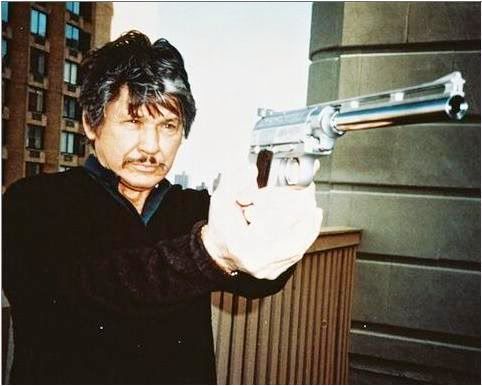
First, consider action heroes that have sprouted up in films over the last few decades, vigilantes such as Charles Bronson’s “Death Wish” character, Paul Kersey. In the first movie, his wife and daughter are raped and beaten by street thugs. His wife eventually dies in the hospital, while his daughter becomes mentally ill as a result of the attack. Paul Kersey then decides that he will stand up to the rampant crime occurring throughout his city as a result of the trauma he suffered. He essentially becomes a hero in the eyes of his fellow citizens as well as the fans of the Charles Bronson series. The Charles Bronson violent form of vigilante justice was very popular in the seventies. People liked the idea of an everyday working man standing up for what he thought is right and taking action for the greater good. However, the popularity of this type of vigilante began to fade because Charles Bronson’s character simply boiled circumstances down to whether their victims deserved to live or die based on personal beliefs about their villainy. Issues over morality begin to become hot topics such as abortion’s right-to-life position and stem-cell research opposition and people start to wonder whether personal justice is even appropriate or feasible.


So what you get in response to audience awareness of these issues are comic book superheroes such as Batman and Spiderman. Batman was inspired to become a crime fighter because of a traumatic experience of witnessing his parents being murdered. Spiderman also experienced a personal loss which inspired him to fight crime as well. Both of these superheroes share a common limitation to their power in that they simply assist in capturing criminals only to leave them for local law enforcement to scoop them up and allow them to tried through the legal court system. These types of superheroes have been fiercely popular for decades and have earned special appreciation lately as a result of phenomenally made movies. All three Spiderman movies were box office blockbusters as were the two latest Batman movies. However, in a global sense, these two crime fighters were really only restricted to fighting crime in the city that they lived. Even though in some of the comics and in the Dark Knight you have incidents where the hero has to go to China to catch his target, the general consensus of the movie adaptations of these superheroes is that they are confined within the limits of their own city.

On the other hand, Iron Man seems to reach a much more global scale in his capability to fight global terrorism. The circumstances of his rise to superhero status are very different from Batman and Spiderman in that he didn’t quite experience a loss of a loved one. His situation was more along the lines of his company betrayed him by dealing under the table to terrorists, and his right hand man tried to have him killed in order to take over the controlling stake of his corporation. Yet, Iron Man was critically acclaimed not only for the superb acting talent of Robert Downey Jr. or the flawless directing of Jon Favreau, but rather on its relevance to modern social events. In Iron Man, you have the same grounded reality check of keeping up appearances with your alter ego. Iron Man and Batman both have to stay under the radar and maintain their high profile public images. Spiderman also has to keep up appearances by having to deal with the stressful life of trying to be a good nephew taking care of his Aunt May, while trying to do well in school despite his strenuous evening activity of fighting crime.
As far as global, but feasible anti-terrorism, George Bush made an attempt at being some form of a modern day real-life superhero. Bush had only been in office for eight months when the terrorist attacks on 9-11 occurred. Considering Bush had barely won the 2001 election against Al Gore, his options for a response to the attacks would have had a direct impact on his support from Americans. Had he taken his time to come to a diplomatic solution, done a proper investigation of the culprits, and carefully planned an overseas strategy, the war in the Middle-East might have had a positive outcome. However, he felt the need to launch a counter-offensive against a country which he thought was a greater threat based off the whim and anger of Americans and used the 9-11 attacks as the precursor for his invasion of Iraq. In Bush’s words, he was trying to “rid the world of evil doers”. On one hand, Bush is satisfying the needs of people who wanted swift violent action in the name of justice as well as protection from future threats. His sloppy counter-attack won him a lot of support from Americans and got him re-elected four years later by the same people who expected him to wrap up what he had started. Bush was thinking black and white in terms of good and evil, just like the superheroes mentioned. In the comic books and movies, there is always an established villain who is countered by an emerging hero. Unfortunately, reality does not just allow the hero to simply be victorious as a direct result of their effort.
The root of the Bush’s problematic presidency was the misguided intentions of the conservative Christian capitalists that supported him and worked under him in his administration. The general view of conservative Republicans is simply: limited government, a strong national defense, and low taxes. However, after the 9-11 attacks, people needed a completely renewed faith in our national defense, so Bush had to make an example out of the entire Middle East after the attack. Unfortunately, the war required more governmental control of power via overriding Congress during a “time of war” and nearly limitless spending for the war effort. What people got as a result was higher taxes and more government. Yet, networks in the media, namely Fox News, had a fiercely right wing agenda that dwelled on the aftermath of the war, reiterating the number of lives lost as well as keeping people in a state of fear by constantly showing hypothetical scenarios of potential terrorist threats. Thus, people felt like they had an obligation to support the war effort because they felt that their lives were constantly in jeopardy.
To everyone’s dismay, a Neoliberalist agenda was at work during the Bush administration. Past presidential speeches such as FDR’s infamous quote, “The only thing we have to fear is fear itself,” as well as President Kennedy’s, “Ask not what your country can do for you, as what you can do for your country,” caused people have become blind patriots paranoid with delusions of being constantly threatened. As a result, the media worked successfully in favor of the Bush administration to essentially wrap the will of the public around the finger of Presidential policies which themselves were an act of terrorism. Pushing an agenda for global democracy and globalization while people are in a state of panic, was what that administration did. According to David Harvey, “the process of neoliberalization has entailed much creative destruction, not only of prior institutional frameworks and powers (even challenging traditional forms of state sovereignty) but also of divisions of labor, social relations, welfare provisions, technological mixes, ways of life and thought, reproductive activities, attachments to the land and habits of the heart” (3). It’s no wonder people became disinclined toward the war as the years went by, because it became obvious that there was an underlying agenda at work. People didn’t have unfounded suspicions that corporate intentions to control oil in the Middle East were at work, especially since the president had worked in the oil industry and the vice president was a big oil conglomerate himself. Harvey further states, “We can, therefore, interpret neoliberalization either as a utopian project to realize a theoretical design for the reorganization of international capitalism or as a political project to reestablish the conditions for capital accumulation and to restore the power of the economic elite” (p.19).
In addition to having had a war fought under false pretenses with improper intentions, you also have an underlying ideology of Orientalism. The best way to turn fear against your enemies is to prove your superiority to them. Thus, in order to create a notion of superiority, you must also create a notion of inferiority as well, which is how Orientalism came to be. The notion of Orientalism came from a European idea that since Europeans considered themselves normal, any culture that deviated from this established norm was considered strange, and therefore inferior. As Edward Said puts it, “Now one of the most important developments in nineteenth-century Orientalism was the distillation of essential ideas about the Orient – its sensuality, its tendency to despotism, its aberrant mentality, its habits of inaccuracy, its backwardness – into a separate and unchallenged coherence” (205). Essentially, there is very limited unbiased information known to the West about the Orient, particularly the Middle East, because much social unrest occurs over there. Therefore, when the media only portrays violent demonstrations in the Middle East and only informs the public of atrocities committed without regard to the journalistic integrity involved in full unbiased media coverage, you limit what people can understand about what’s going on. In other words, if all you see is terrorism, then all you inadvertently see are terrorists. What you end up with is a majority of people that have been manipulated into ignorance in order to accept a clear black and white scenario of good versus evil. So considering George Bush’s failed attempt at securing vigilante justice with continued support from the American people, it looks as if people are only looking for a hero that operates within a fictional scenario in which the line between good and evil is very clear.

Thus, it becomes clear that since movies in mainstream popular culture such as Quantum of Solace maintain much social relevance, people are looking for heightened sense of social consciousness. Apparently people have felt betrayed for the last eight years because they allowed their gullibility and ignorance get the best of them, that now they want to be on their toes about current events. Steven Zeitchik of Risky Biz Blog says, “For years the conventional wisdom was that it if you were going to give people something to fight over, best to make it drugs or obscene amounts of money, in part because villains don't generally pay much attention to NPR and in part because it's assumed viewers don't get that same thrill from watching characters' outmaneuver each other over life's necessities than over its vices…either movies have become more sober - or filmgoers in tough times are starting to view the pursuit of life's necessities as a little more exciting.” In addition, social consciousness has moral implications in that socially conscious people tend to be more considerate without regards to any pre-established biases. According to Christoph Lindner, “The staggering success of Fleming’s 007 novels and their later film adaptations is linked to the status of Bond himself as a ‘mobile signifier’, a floating cultural icon who is continually reconfigured and repositioned in the face of change” (3).
What can be concluded from all this is that up until recently, the American public has been generally hot-headed and ignorant, and those in the position of authority as well as the most influential channels of the media over the last couple of decades have operated under an ideology that revolved around Orientalism and Neoliberalism. It was only after the Bush administration’s gross misleading of the American people came into the public eye that people began to become more socially conscious. It was by this new socially conscious awareness of audiences that the James Bond character had to adapt in order to be relevant enough for the new audience. The black and white scenario of good and evil for the popular comic book characters is only relevant in fiction. George Bush’s attempt at simplifying the Iraq war into this type of situation just proves how ignorant he is as well. What America needs is a leader that can handle situations intellectually so that all potential consequences can be measured appropriately. Then we can use action heroes such as James Bond to be our outlet for a political thriller.
Annotated Bibliography
Said, Edward. Orientalism. Vintage Books. New York. 1979.
I used a passage from this book because it conveyed a true meaning of what it means to marginalize a culture based on your own ignorance. The author makes a good note that the oversimplification of things merely furthers the problem of discrimination.
Harvey, David. Neoliberalism. Oxford University Press. New York. 2005.
I used a passage from this book that I thought described the era of republicanism in this country over the last few decades very well. It stated that as a country, we tend to think that everything we do is the best that that particular thing could possibly be done and we try to force it upon the rest of the world.
Zeitchik, Steven. A Quantum of … Social Relevance? http://www.riskybusinessblog.com/2008/10/a-quantum-ofsoc.html
This article is about how the intelligence and social awareness of action movie goers has increased over the last few decades and how the new Bond movies have had to adapt to the new audience. The quote I chose, reiterates how mixing in a little reality is more important than just watching things blow up.
Lindner, Christopher. The James Bond Phenomenon. Manchester University Press. 2003.
This book is essentially an in-depth analysis of the social, historical, and political relevance of the James Bond series of books and movies. The quote I chose has to do with Bond’s ever-changing persona based on the evolution of modern culture.

First, consider action heroes that have sprouted up in films over the last few decades, vigilantes such as Charles Bronson’s “Death Wish” character, Paul Kersey. In the first movie, his wife and daughter are raped and beaten by street thugs. His wife eventually dies in the hospital, while his daughter becomes mentally ill as a result of the attack. Paul Kersey then decides that he will stand up to the rampant crime occurring throughout his city as a result of the trauma he suffered. He essentially becomes a hero in the eyes of his fellow citizens as well as the fans of the Charles Bronson series. The Charles Bronson violent form of vigilante justice was very popular in the seventies. People liked the idea of an everyday working man standing up for what he thought is right and taking action for the greater good. However, the popularity of this type of vigilante began to fade because Charles Bronson’s character simply boiled circumstances down to whether their victims deserved to live or die based on personal beliefs about their villainy. Issues over morality begin to become hot topics such as abortion’s right-to-life position and stem-cell research opposition and people start to wonder whether personal justice is even appropriate or feasible.


So what you get in response to audience awareness of these issues are comic book superheroes such as Batman and Spiderman. Batman was inspired to become a crime fighter because of a traumatic experience of witnessing his parents being murdered. Spiderman also experienced a personal loss which inspired him to fight crime as well. Both of these superheroes share a common limitation to their power in that they simply assist in capturing criminals only to leave them for local law enforcement to scoop them up and allow them to tried through the legal court system. These types of superheroes have been fiercely popular for decades and have earned special appreciation lately as a result of phenomenally made movies. All three Spiderman movies were box office blockbusters as were the two latest Batman movies. However, in a global sense, these two crime fighters were really only restricted to fighting crime in the city that they lived. Even though in some of the comics and in the Dark Knight you have incidents where the hero has to go to China to catch his target, the general consensus of the movie adaptations of these superheroes is that they are confined within the limits of their own city.

On the other hand, Iron Man seems to reach a much more global scale in his capability to fight global terrorism. The circumstances of his rise to superhero status are very different from Batman and Spiderman in that he didn’t quite experience a loss of a loved one. His situation was more along the lines of his company betrayed him by dealing under the table to terrorists, and his right hand man tried to have him killed in order to take over the controlling stake of his corporation. Yet, Iron Man was critically acclaimed not only for the superb acting talent of Robert Downey Jr. or the flawless directing of Jon Favreau, but rather on its relevance to modern social events. In Iron Man, you have the same grounded reality check of keeping up appearances with your alter ego. Iron Man and Batman both have to stay under the radar and maintain their high profile public images. Spiderman also has to keep up appearances by having to deal with the stressful life of trying to be a good nephew taking care of his Aunt May, while trying to do well in school despite his strenuous evening activity of fighting crime.
As far as global, but feasible anti-terrorism, George Bush made an attempt at being some form of a modern day real-life superhero. Bush had only been in office for eight months when the terrorist attacks on 9-11 occurred. Considering Bush had barely won the 2001 election against Al Gore, his options for a response to the attacks would have had a direct impact on his support from Americans. Had he taken his time to come to a diplomatic solution, done a proper investigation of the culprits, and carefully planned an overseas strategy, the war in the Middle-East might have had a positive outcome. However, he felt the need to launch a counter-offensive against a country which he thought was a greater threat based off the whim and anger of Americans and used the 9-11 attacks as the precursor for his invasion of Iraq. In Bush’s words, he was trying to “rid the world of evil doers”. On one hand, Bush is satisfying the needs of people who wanted swift violent action in the name of justice as well as protection from future threats. His sloppy counter-attack won him a lot of support from Americans and got him re-elected four years later by the same people who expected him to wrap up what he had started. Bush was thinking black and white in terms of good and evil, just like the superheroes mentioned. In the comic books and movies, there is always an established villain who is countered by an emerging hero. Unfortunately, reality does not just allow the hero to simply be victorious as a direct result of their effort.
The root of the Bush’s problematic presidency was the misguided intentions of the conservative Christian capitalists that supported him and worked under him in his administration. The general view of conservative Republicans is simply: limited government, a strong national defense, and low taxes. However, after the 9-11 attacks, people needed a completely renewed faith in our national defense, so Bush had to make an example out of the entire Middle East after the attack. Unfortunately, the war required more governmental control of power via overriding Congress during a “time of war” and nearly limitless spending for the war effort. What people got as a result was higher taxes and more government. Yet, networks in the media, namely Fox News, had a fiercely right wing agenda that dwelled on the aftermath of the war, reiterating the number of lives lost as well as keeping people in a state of fear by constantly showing hypothetical scenarios of potential terrorist threats. Thus, people felt like they had an obligation to support the war effort because they felt that their lives were constantly in jeopardy.
To everyone’s dismay, a Neoliberalist agenda was at work during the Bush administration. Past presidential speeches such as FDR’s infamous quote, “The only thing we have to fear is fear itself,” as well as President Kennedy’s, “Ask not what your country can do for you, as what you can do for your country,” caused people have become blind patriots paranoid with delusions of being constantly threatened. As a result, the media worked successfully in favor of the Bush administration to essentially wrap the will of the public around the finger of Presidential policies which themselves were an act of terrorism. Pushing an agenda for global democracy and globalization while people are in a state of panic, was what that administration did. According to David Harvey, “the process of neoliberalization has entailed much creative destruction, not only of prior institutional frameworks and powers (even challenging traditional forms of state sovereignty) but also of divisions of labor, social relations, welfare provisions, technological mixes, ways of life and thought, reproductive activities, attachments to the land and habits of the heart” (3). It’s no wonder people became disinclined toward the war as the years went by, because it became obvious that there was an underlying agenda at work. People didn’t have unfounded suspicions that corporate intentions to control oil in the Middle East were at work, especially since the president had worked in the oil industry and the vice president was a big oil conglomerate himself. Harvey further states, “We can, therefore, interpret neoliberalization either as a utopian project to realize a theoretical design for the reorganization of international capitalism or as a political project to reestablish the conditions for capital accumulation and to restore the power of the economic elite” (p.19).
In addition to having had a war fought under false pretenses with improper intentions, you also have an underlying ideology of Orientalism. The best way to turn fear against your enemies is to prove your superiority to them. Thus, in order to create a notion of superiority, you must also create a notion of inferiority as well, which is how Orientalism came to be. The notion of Orientalism came from a European idea that since Europeans considered themselves normal, any culture that deviated from this established norm was considered strange, and therefore inferior. As Edward Said puts it, “Now one of the most important developments in nineteenth-century Orientalism was the distillation of essential ideas about the Orient – its sensuality, its tendency to despotism, its aberrant mentality, its habits of inaccuracy, its backwardness – into a separate and unchallenged coherence” (205). Essentially, there is very limited unbiased information known to the West about the Orient, particularly the Middle East, because much social unrest occurs over there. Therefore, when the media only portrays violent demonstrations in the Middle East and only informs the public of atrocities committed without regard to the journalistic integrity involved in full unbiased media coverage, you limit what people can understand about what’s going on. In other words, if all you see is terrorism, then all you inadvertently see are terrorists. What you end up with is a majority of people that have been manipulated into ignorance in order to accept a clear black and white scenario of good versus evil. So considering George Bush’s failed attempt at securing vigilante justice with continued support from the American people, it looks as if people are only looking for a hero that operates within a fictional scenario in which the line between good and evil is very clear.

Thus, it becomes clear that since movies in mainstream popular culture such as Quantum of Solace maintain much social relevance, people are looking for heightened sense of social consciousness. Apparently people have felt betrayed for the last eight years because they allowed their gullibility and ignorance get the best of them, that now they want to be on their toes about current events. Steven Zeitchik of Risky Biz Blog says, “For years the conventional wisdom was that it if you were going to give people something to fight over, best to make it drugs or obscene amounts of money, in part because villains don't generally pay much attention to NPR and in part because it's assumed viewers don't get that same thrill from watching characters' outmaneuver each other over life's necessities than over its vices…either movies have become more sober - or filmgoers in tough times are starting to view the pursuit of life's necessities as a little more exciting.” In addition, social consciousness has moral implications in that socially conscious people tend to be more considerate without regards to any pre-established biases. According to Christoph Lindner, “The staggering success of Fleming’s 007 novels and their later film adaptations is linked to the status of Bond himself as a ‘mobile signifier’, a floating cultural icon who is continually reconfigured and repositioned in the face of change” (3).
What can be concluded from all this is that up until recently, the American public has been generally hot-headed and ignorant, and those in the position of authority as well as the most influential channels of the media over the last couple of decades have operated under an ideology that revolved around Orientalism and Neoliberalism. It was only after the Bush administration’s gross misleading of the American people came into the public eye that people began to become more socially conscious. It was by this new socially conscious awareness of audiences that the James Bond character had to adapt in order to be relevant enough for the new audience. The black and white scenario of good and evil for the popular comic book characters is only relevant in fiction. George Bush’s attempt at simplifying the Iraq war into this type of situation just proves how ignorant he is as well. What America needs is a leader that can handle situations intellectually so that all potential consequences can be measured appropriately. Then we can use action heroes such as James Bond to be our outlet for a political thriller.
Annotated Bibliography
Said, Edward. Orientalism. Vintage Books. New York. 1979.
I used a passage from this book because it conveyed a true meaning of what it means to marginalize a culture based on your own ignorance. The author makes a good note that the oversimplification of things merely furthers the problem of discrimination.
Harvey, David. Neoliberalism. Oxford University Press. New York. 2005.
I used a passage from this book that I thought described the era of republicanism in this country over the last few decades very well. It stated that as a country, we tend to think that everything we do is the best that that particular thing could possibly be done and we try to force it upon the rest of the world.
Zeitchik, Steven. A Quantum of … Social Relevance? http://www.riskybusinessblog.com/2008/10/a-quantum-ofsoc.html
This article is about how the intelligence and social awareness of action movie goers has increased over the last few decades and how the new Bond movies have had to adapt to the new audience. The quote I chose, reiterates how mixing in a little reality is more important than just watching things blow up.
Lindner, Christopher. The James Bond Phenomenon. Manchester University Press. 2003.
This book is essentially an in-depth analysis of the social, historical, and political relevance of the James Bond series of books and movies. The quote I chose has to do with Bond’s ever-changing persona based on the evolution of modern culture.
Tuesday, April 21, 2009
Neoliberalism and Bond
In David Harvey’s book, A Brief History of Neoliberalism, he describes how the political ideology of world leaders since the 1980’s has established a philosophical context that the necessity of free markets, private ownership, and the deregulation of state government has provoked a global opinion that there is no alternative to this one fundamental belief system. Unfortunately, this belief system harbors a number of illogical fallacies including appeals to fear, consequences, and necessity. The underlying ideology of neoliberalism can be seen in the various James Bond movies.
Essentially, the world has adopted the opinion that anything that goes against this so called code of conduct represents a threat and must be dealt with in a manner that necessitates an agenda of aggressive, imperialist occupation of countries that don’t give in. In the case of the James Bond movies, to preserve the interests of the world, Bond is personified as the prideful self-righteous hand of England that saves the world time and time again from multiple threats to the neoliberalist platform of freedom.
Unfortunately, with such a pervasive political ideology, saving the world from threats against a strict narrowly established political philosophy is seen as common sense. “Common sense is constructed out of long-standing practices of cultural socialization often rooted deep in regional or national traditions. It is not the same as ‘good sense’ that can be constructed out of critical engagement with the issues of the day. Common sense can, therefore, be profoundly misleading, obfuscating or disguising real problems under cultural prejudices. Cultural and traditional values and fears can be mobilized to mask other realities. The word ‘freedom’ resonates so widely within the common-sense understanding of Americans that it becomes ‘a button that elites can press to open the door to the masses’ to justify almost anything (p.39)”. Thus, in order to justify a war for example, world leaders could win over majority support by simply stating that violence is justified in the name of the greatest good: freedom. As long as these leaders can keep the world in fear, they can adopt an "any means necessary" agenda to preserve this ideology.
Essentially, the world has adopted the opinion that anything that goes against this so called code of conduct represents a threat and must be dealt with in a manner that necessitates an agenda of aggressive, imperialist occupation of countries that don’t give in. In the case of the James Bond movies, to preserve the interests of the world, Bond is personified as the prideful self-righteous hand of England that saves the world time and time again from multiple threats to the neoliberalist platform of freedom.
Unfortunately, with such a pervasive political ideology, saving the world from threats against a strict narrowly established political philosophy is seen as common sense. “Common sense is constructed out of long-standing practices of cultural socialization often rooted deep in regional or national traditions. It is not the same as ‘good sense’ that can be constructed out of critical engagement with the issues of the day. Common sense can, therefore, be profoundly misleading, obfuscating or disguising real problems under cultural prejudices. Cultural and traditional values and fears can be mobilized to mask other realities. The word ‘freedom’ resonates so widely within the common-sense understanding of Americans that it becomes ‘a button that elites can press to open the door to the masses’ to justify almost anything (p.39)”. Thus, in order to justify a war for example, world leaders could win over majority support by simply stating that violence is justified in the name of the greatest good: freedom. As long as these leaders can keep the world in fear, they can adopt an "any means necessary" agenda to preserve this ideology.
Tuesday, February 24, 2009
My Part in the Group Presentation
I was in group 1 and my part was to come up with iconic references to America's mentality during the Cold War in which the United States was seen as the patriarchal leader and economic and moral superpower of the World. I was then supposed to establish a juxtoposition to the villainization of the rest of the world that opposed American philosophy.
My media references were a sound byte from the 1957 movie "The Beginning of the End," a clip from "That 70's Show", and a quote from Vladimir Putin about Communism. Unfortunately, our presentation ran a little long because of the class discussion that ensued halfway through, so I figured the open forum setting and the few clips we showed was sufficient enough to keep the presentation alive.
My media references were a sound byte from the 1957 movie "The Beginning of the End," a clip from "That 70's Show", and a quote from Vladimir Putin about Communism. Unfortunately, our presentation ran a little long because of the class discussion that ensued halfway through, so I figured the open forum setting and the few clips we showed was sufficient enough to keep the presentation alive.
Tuesday, February 10, 2009
Short Paper #1
Good Intention, Bad Connotation
Ian Fleming's novels revealed a seemingly unnoticed underbelly of London by much drama and action through an endless roller-coaster thrill ride. English readers from every class were naturally drawn to Fleming’s novels because they maintained the superiority of England that seemed to have been lost after the Second World War The popularity of the novels skyrocketed and paved the way for a huge franchise in the film industry that put British films at the top of the lists alongside American classics in Hollywood. However, Fleming said himself that he only wrote the books to escape from his wife’s nagging and wanted them to be read by scholarly A class readers (Bennet). The division between Fleming’s intentions and its assimilation into society caused a phenomenon that critics would agree is a pompous and exaggerated version of what England’s Military Intelligence was really like during the time it was written.
The James Bond Character oozes with style, class, and masculinity even when his libido is put to the ultimate test. The prime example of such a test is in Casino Royale when Bond is captured by Le Chiffre and repeatedly whipped in the testicles with a knotted rope, Bond maintains his composure. Even when Vesper betrays his, he keeps cool while responding to M’s inquiring about his grief by simply stating, “The bitch is dead” (Black). However, beneath the excitement and grandeur of the films and novels lies an unnerving subtext. The books were written during the first World War in which London had been bombed halfway to hell. The British were caught off guard and strategically crippled by the German aerial forces which left them all but helpless. It was only after America joined the alliance that the momentum of the war finally shifted. Thus, one can infer that this shift also represented a shift in power and influence throughout the world from the English to the Americans. In this situation, England would have felt completely emasculated, which is monumentous on a historical scale because for centuries prior to the world war, England maintained an unabated stranglehold of influence on the entire world.
Thus, an ironic situation developed as a result of the veil of superiority that the Bond novels appeared to be. Critics began to wonder whether Fleming had actually written the novels to save face in front of the Americans after the war had ended. If this were really the case then Fleming had done a great disservice to Great Britain. By attempting to save face, not only did it make Britain look pathetic, but it solidified the fact that Britain was truly no longer a colonial power, but rather a “paper tiger” in a manner of speaking. Had this been the case, the United States would not have seen Britain as a formidable ally for support against the Russians during the Cold War. This would have left the U.S feeling cornered and would have greatly increased the likelihood of the U.S launching its missiles at Russia with precedence as a pre-emptive defensive strategy.
In retrospect, if Fleming had been around to take into consideration the critics of his novels today, he would certainly not have written his novels in the way he did. Most likely, he would have incorporated Americans as equals and globalized the enemy in an effort not to alienate any one particular country. If he had taken this route when writing his novels he would not have come under suspicion of coddling the general public in a pathetic attempt to save face for the sake of England, but rather attracting more A class readers and fewer from the B and C class.
Works Cited
Bennett, Tony and Wallocott, Janet. The Moments of Bond (class handouts)
Black, Jeremy. The Politics of James Bond: From Fleming’s Novels to the Big Screen. Westright: Praeger. 2001.
Baron, Cynthia. Dr. No: Bonding Britishness to Racial Sovereignty. (class handouts)
Bennett, Tony and Wallocott, Janet. The Moments of Bond (class handouts)
Black, Jeremy. The Politics of James Bond: From Fleming’s Novels to the Big Screen. Westright: Praeger. 2001.
Baron, Cynthia. Dr. No: Bonding Britishness to Racial Sovereignty. (class handouts)
Subscribe to:
Posts (Atom)
